IntravelCard, A Safer Way for Tourists to Manage Money in Iran
Due to international sanctions, Visa and Mastercard don't work in Iran, so tourists carry stacks of cash. IntravelCard replaces that with a local bank card, app, and dashboard built for trust.
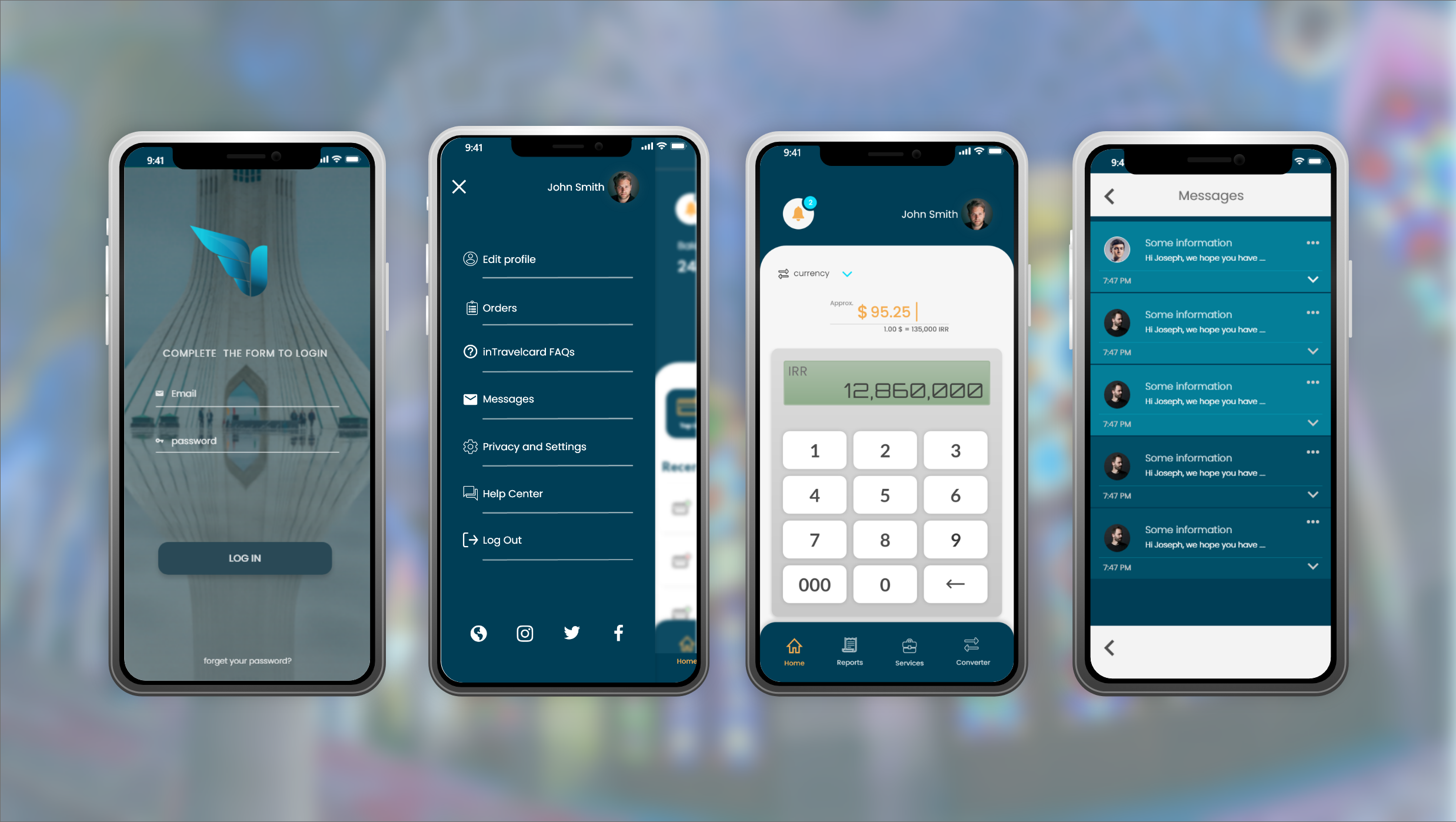
As the UI/UX Designer, I led the design of IntravelCard, a secure digital banking and currency conversion platform tailored for foreign tourists visiting Iran. Global cards don't work there, forcing travelers to rely on cash, risky and confusing given the Iranian Rial's high denominations.
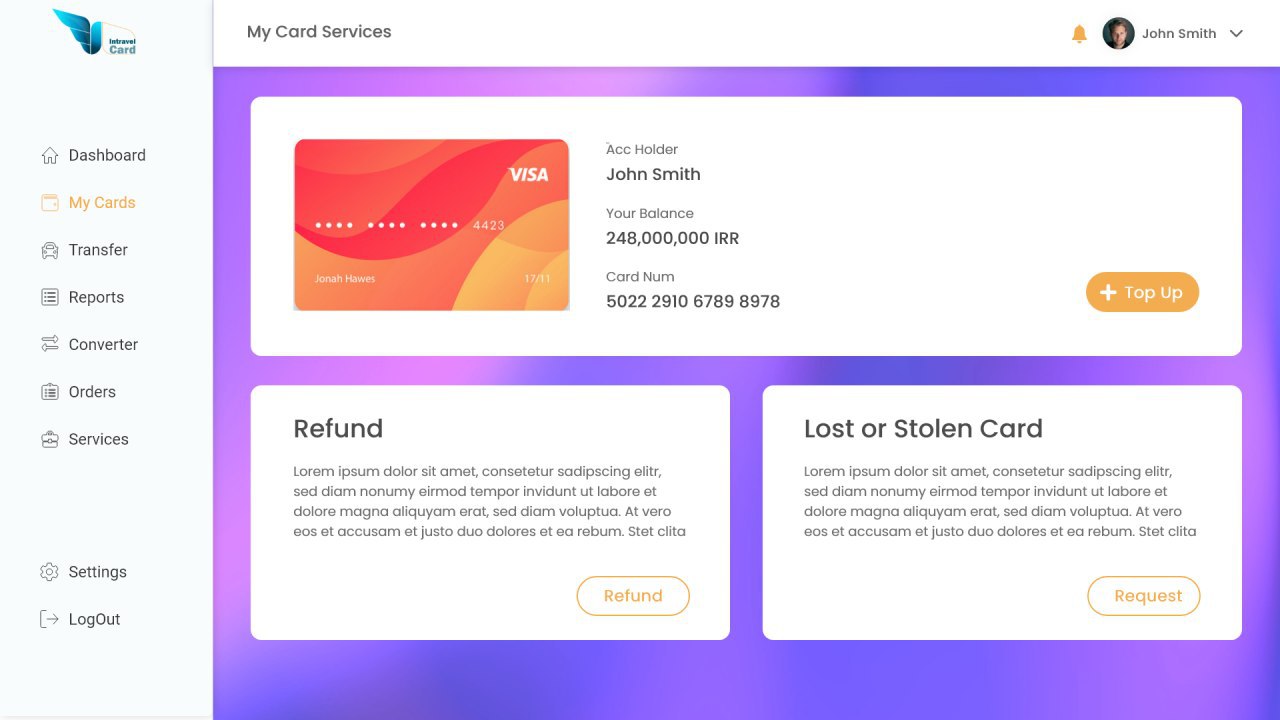
Our solution introduced an Iranian bank card issued under each tourist's name, paired with a mobile app, website, and admin dashboard, letting tourists check balances in real time, convert currencies instantly, and pay safely without carrying large sums of cash.
Project Goals
- Enable secure and easy payments for tourists traveling in Iran
- Simplify currency conversion with accurate real-time rates
- Reduce the risk and confusion of handling physical cash
- Provide intuitive UX for both tourists and bank staff
- Design a cohesive ecosystem: mobile app, website, and admin dashboard
Challenges
- No access to international payment systems (Visa, Mastercard, etc.)
- Complex currency structure, Rial vs. Toman, with multiple zeros
- Poor internet connectivity in tourist areas
- Short testing window, users only stayed a few days in Iran
- Balancing clarity, simplicity, and trust in a financial context
Research & Discovery
Tourists entering Iran face confusion immediately: they must exchange cash, remember exchange rates, and handle piles of notes. For many, this creates anxiety about safety and overpayment. To understand user needs, I combined quick in-person interviews with tourists receiving their cards, feedback from partner travel agencies, and secondary research on pain points from TripAdvisor and Reddit forums.
Personas
| Persona | Frustration | Quote |
|---|---|---|
| Sara, 46, solo traveler, NL. Practical, trust-focused. Exchanged €3,000 in cash for a 3-week trip. | "Too many zeros! Is it Rial or Toman?" Unsafe to carry envelopes of cash. | "It's a relief not carrying thousands of bills, now I can actually enjoy my trip." |
| Liam, 29, backpacker, AU. Budget-minded, independent. $30/day for 5 weeks. | Confused by IRR vs. Toman, cash-only shops, no Mastercard support. | "This Iranian card makes things much easier, finally, I can just tap and go." |
| David, 35, world traveler, CA. Analytical, tech-savvy, uses Revolut/Wise/Monzo. | "Feels like going 20 years back!" Must carry cash backups. | "Having an Iranian card feels safer and more reliable, I finally feel in control of my money." |
Key insights: tourists want clarity and trust, not complexity. Offline access is essential due to unstable connections. Currency conversion must feel instant and visual, not numeric. Tourists value safety reassurance, the interface must "feel official."
Design Process
I followed an iterative process inspired by the design-thinking framework:
- Empathize & Define. Short interviews with arriving tourists and travel staff; defined main problems, unclear rates, unsafe cash use, cognitive overload from large numbers. Mapped key user journeys for card activation, balance check, and conversion.
- Ideate. Sketched flows for onboarding, currency calculator, and balance overview. Explored layouts showing IRR↔EUR conversion in one glance. Brainstormed a visual hierarchy for trust, blue tones, white space, structured typography.
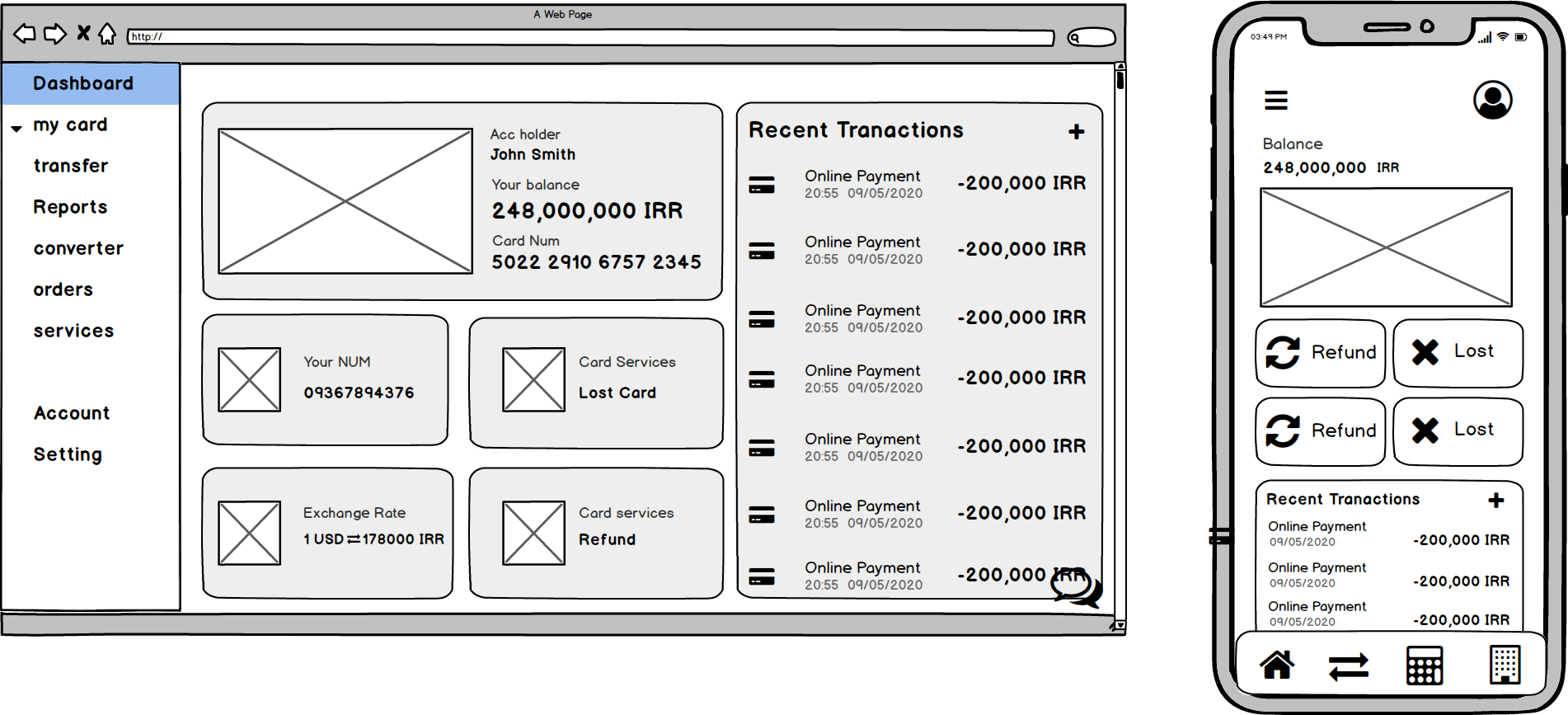
- Prototype. Low-fidelity wireframes to test flow comprehension, then high-fidelity interactive prototypes in Adobe XD for mobile, website, and admin dashboard. Large buttons for accessibility while traveling.
- Usability Testing. Simulated real usage with 8 tourists (Netherlands, Australia, France, Canada) and 3 bank staff for the admin panel. Tasks: activate card, check balance, convert IRR→EUR, view transaction history, navigate the website.
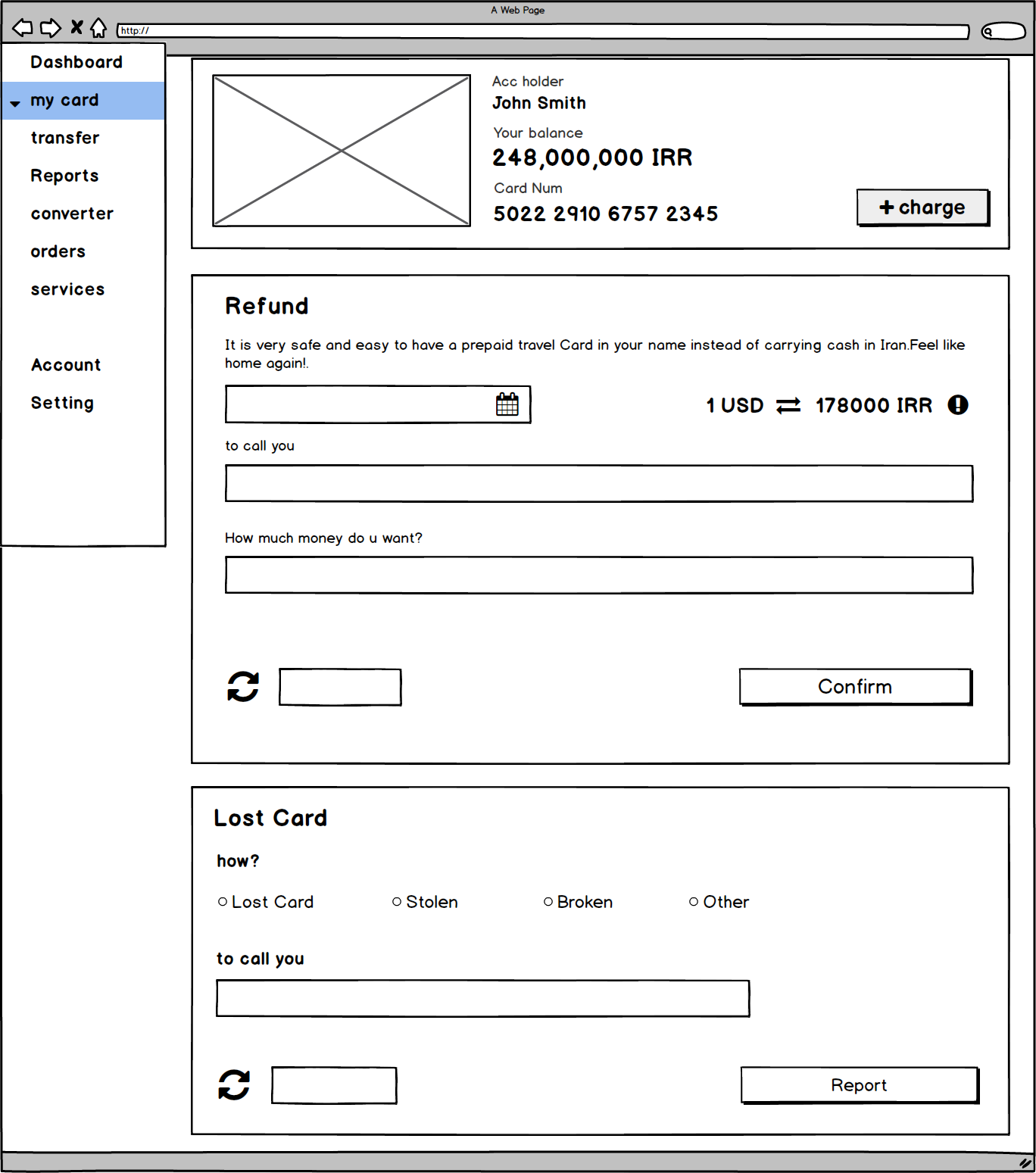
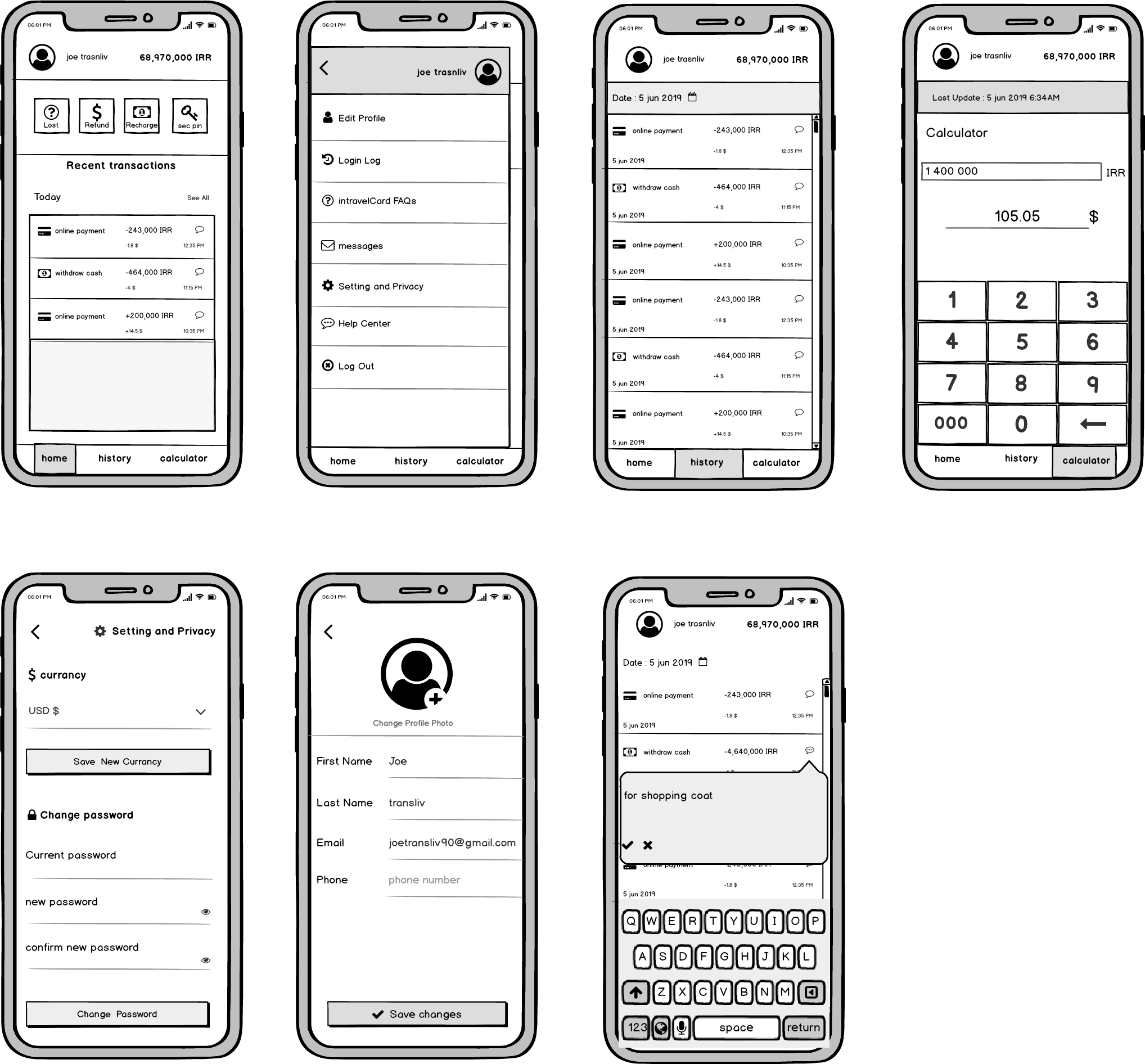
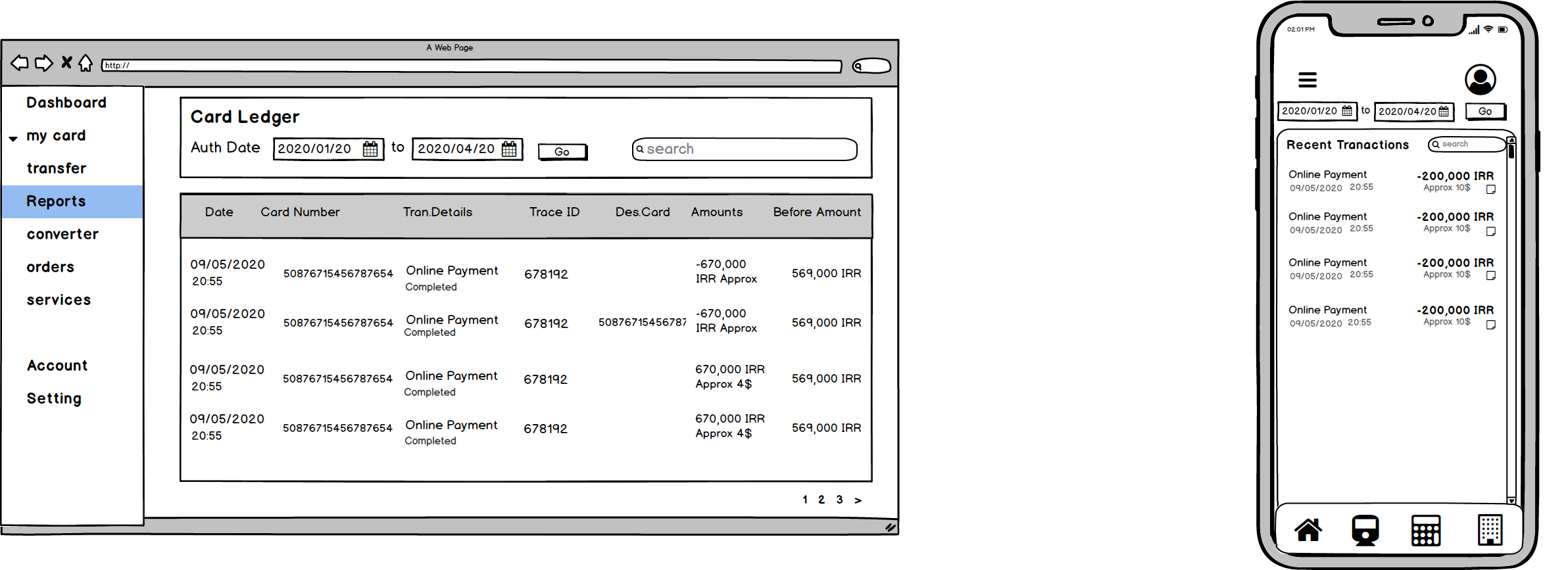
Usability results
User feedback: "I can understand how much I'm spending." "It feels modern and safe, I'm happy with it." "The calculator is handy; I can see what I pay in euros instantly."
Design System
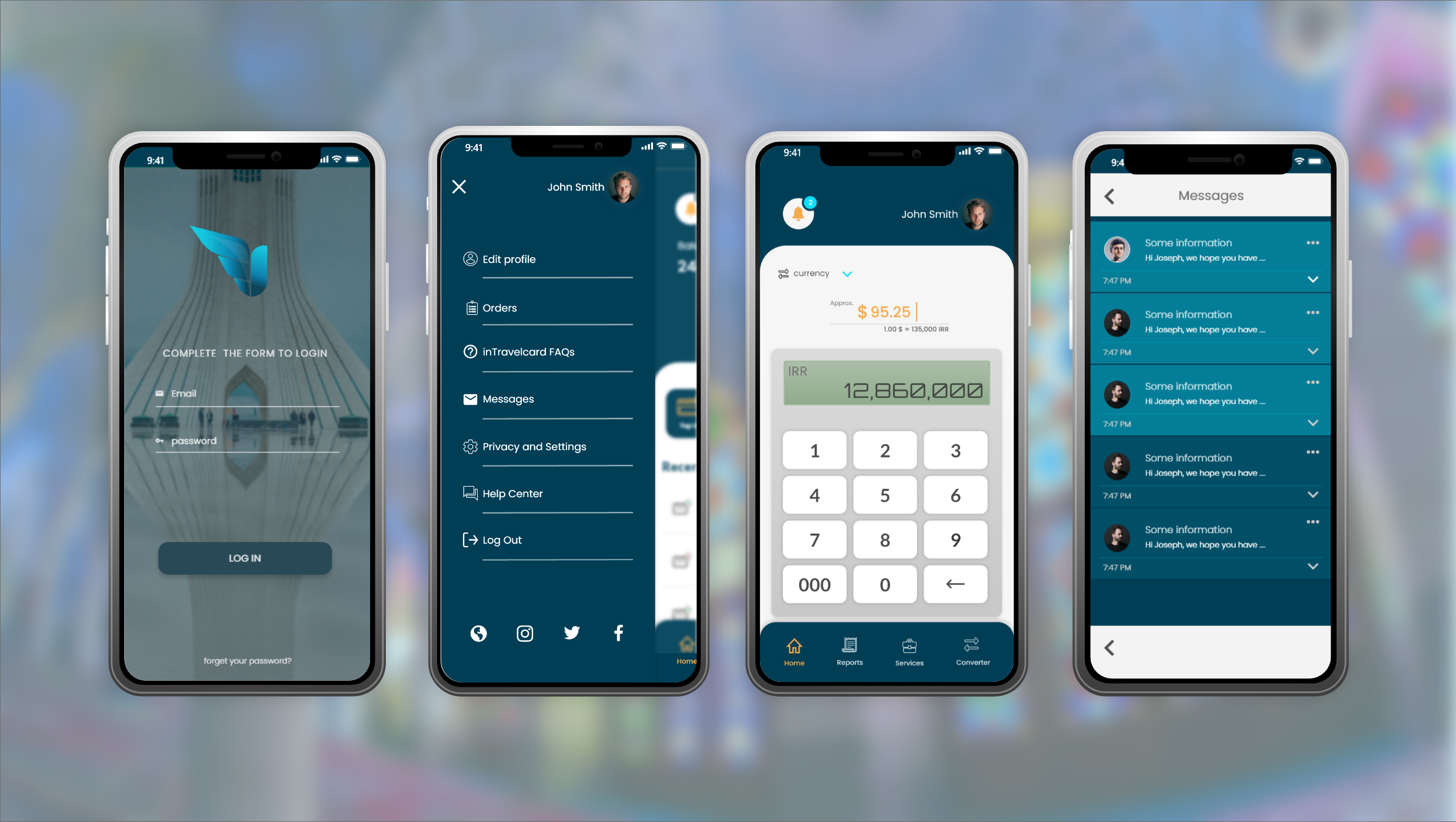
A unified system ensured consistency across app, web, and admin panel: modern sans-serif typography for readability; calm blue (trust), white (clarity), and mint green (confirmation); reusable card, table, and button components; simple, familiar icons, cards, arrows, wallet, currency signs.
Interface Design
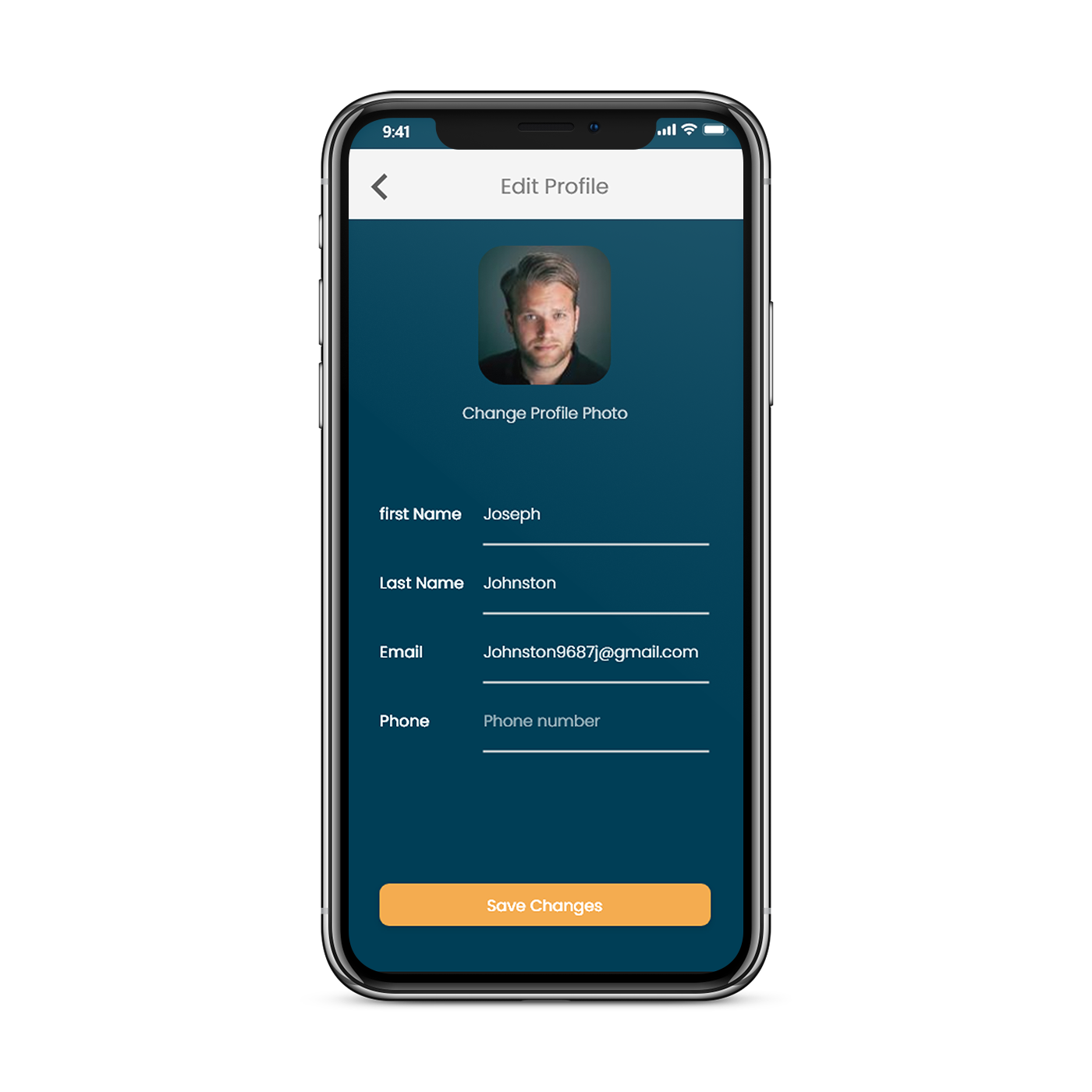
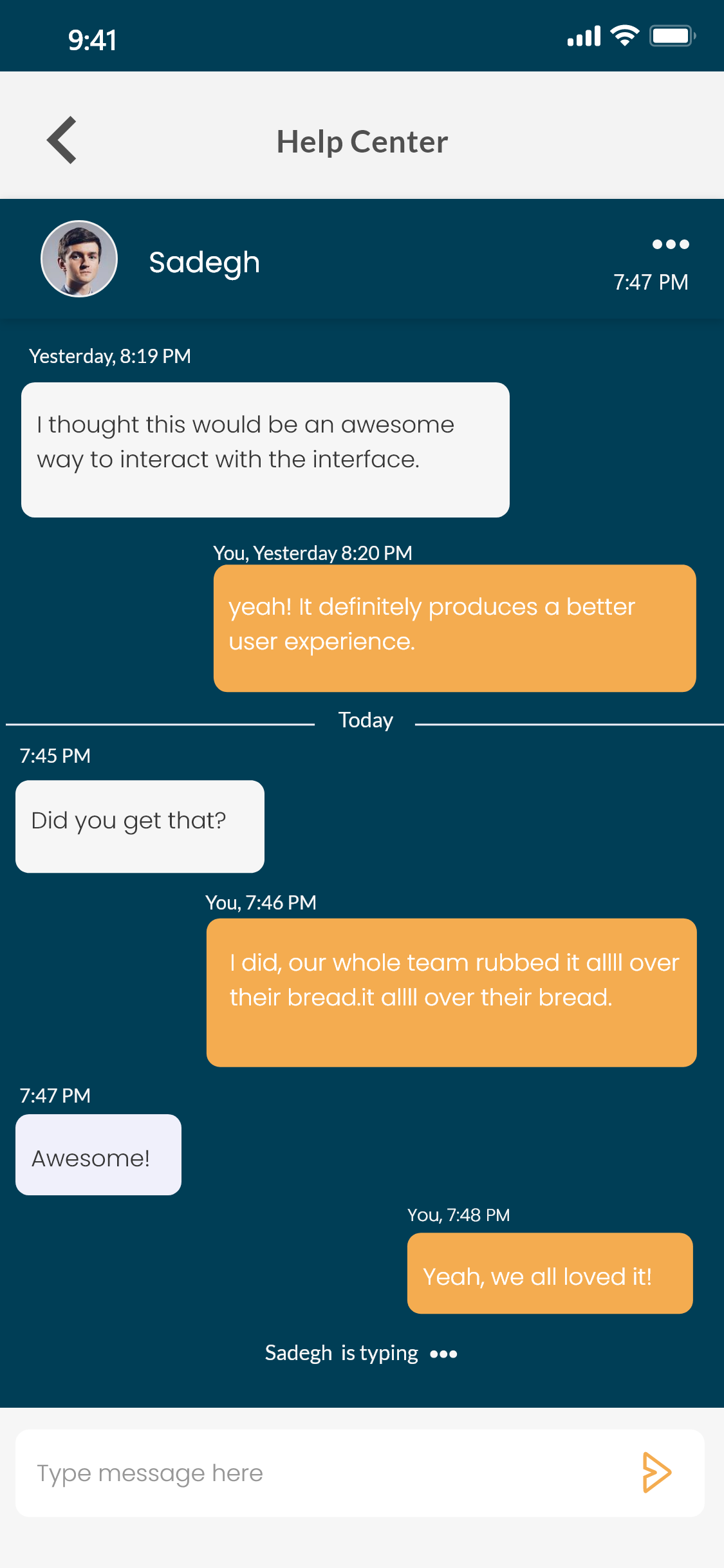
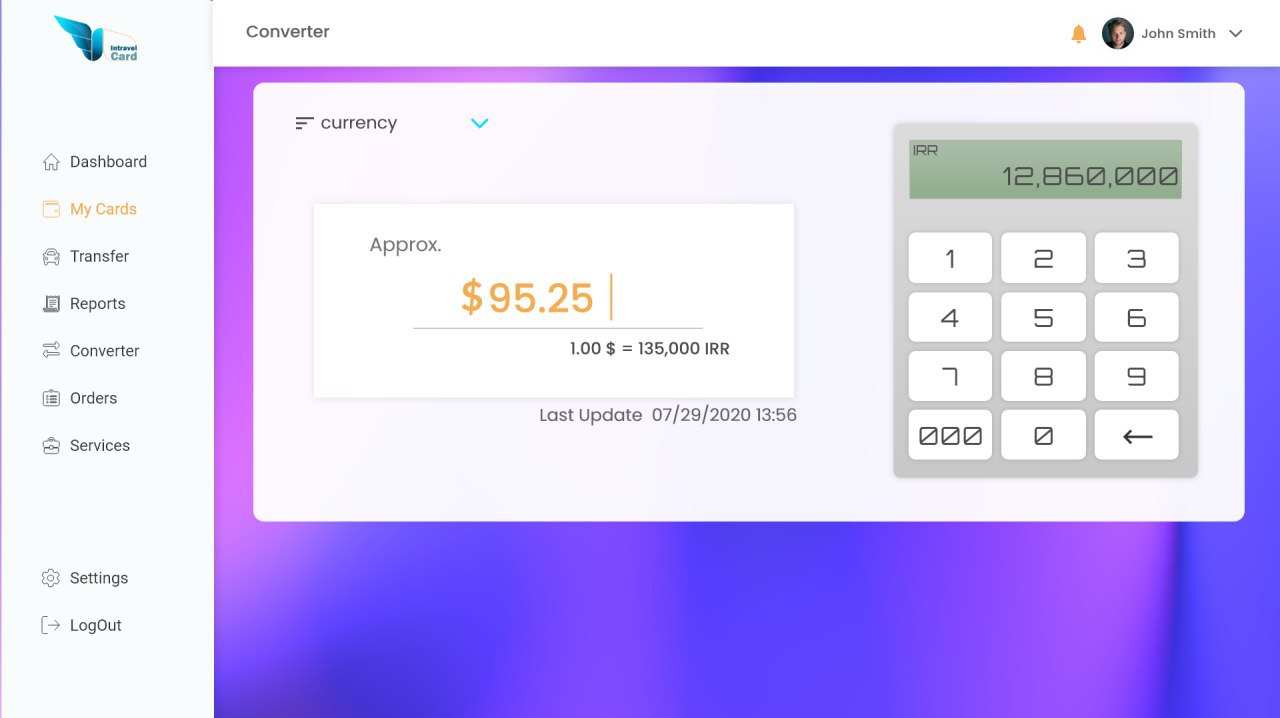
Mobile app: real-time balance and conversion summary on the home screen, an instant IRR↔EUR/USD calculator, a clear transaction list with colored indicators, and a quick freeze/unfreeze card-safety feature.
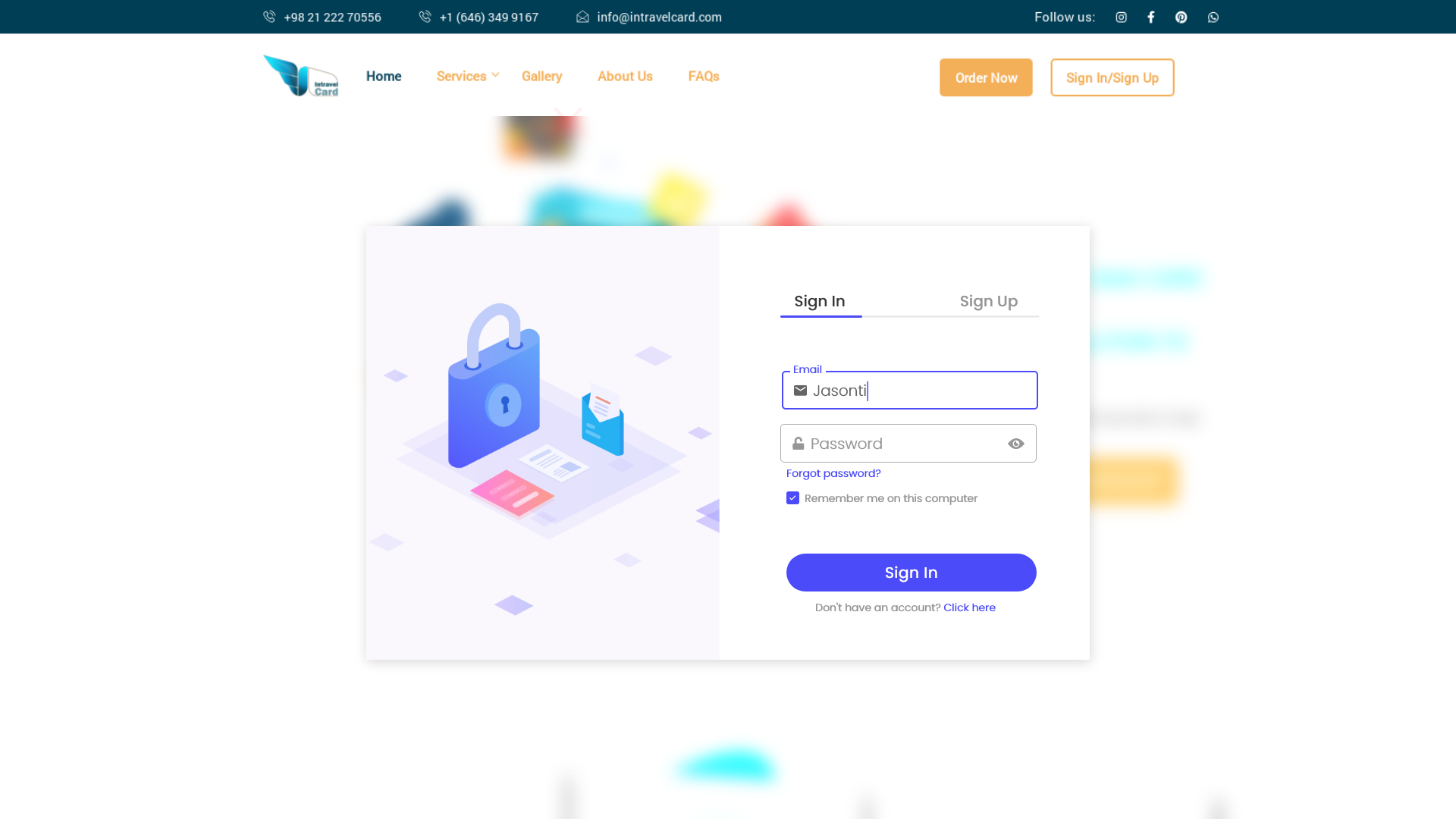
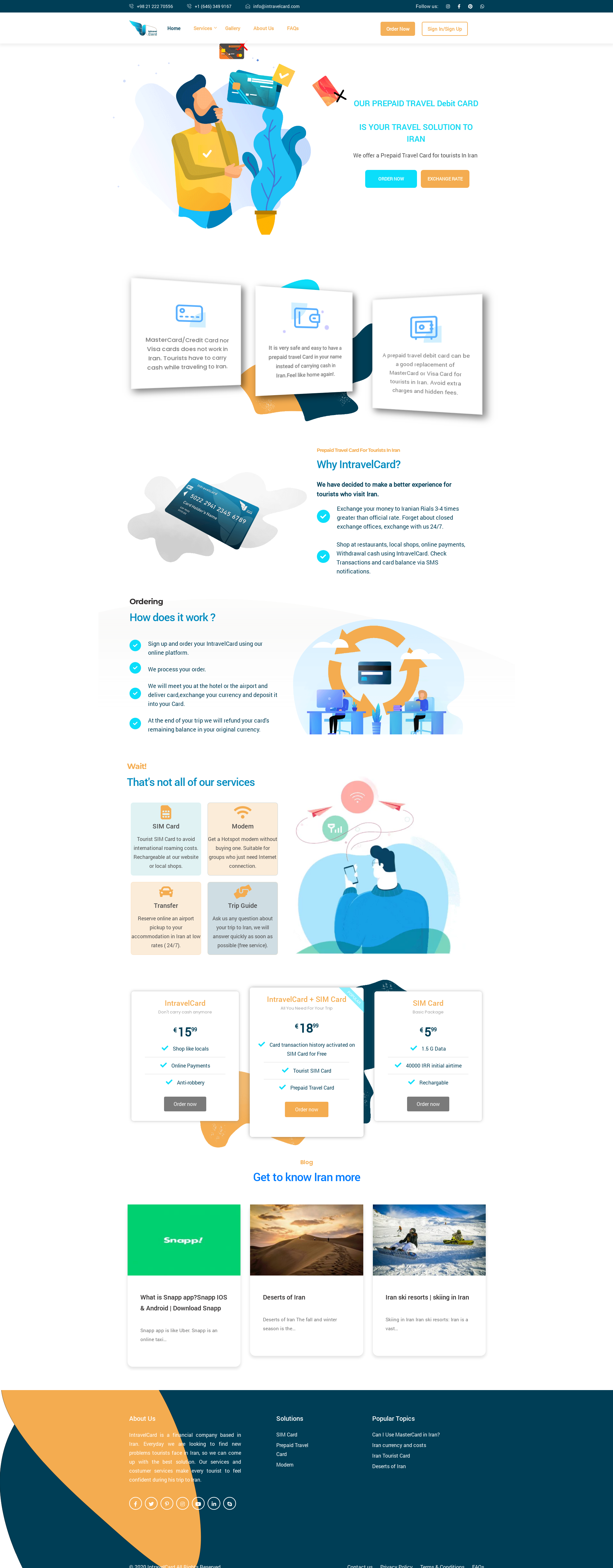
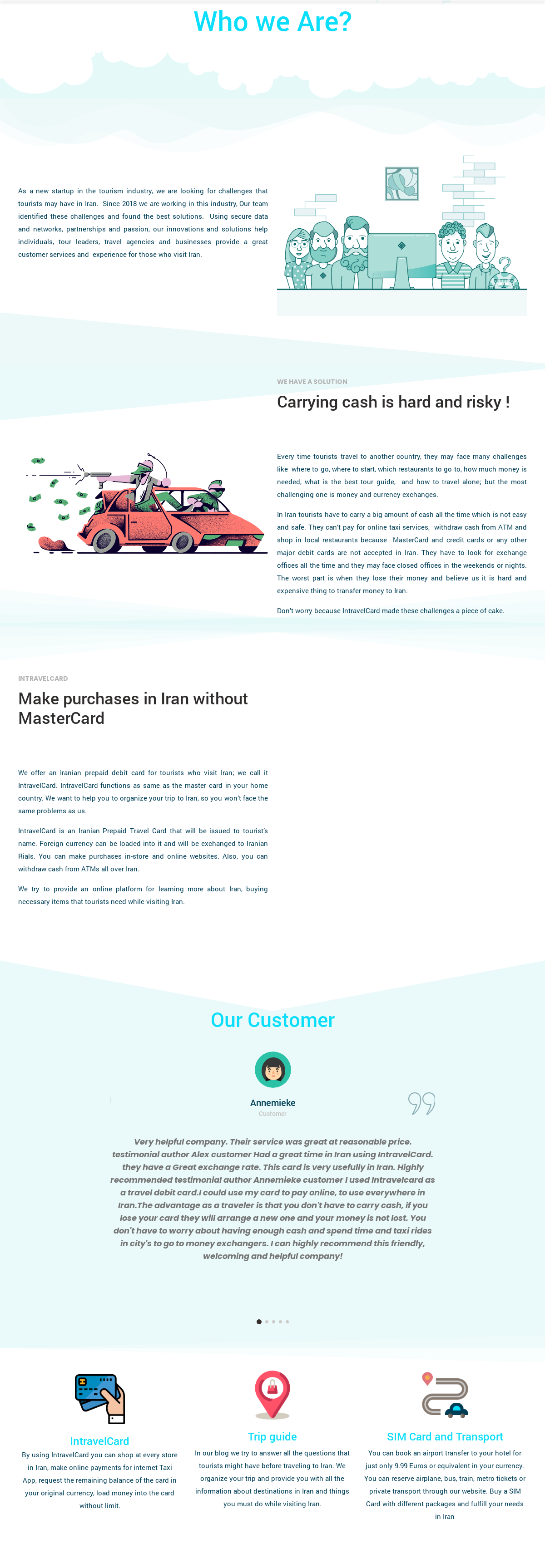
Website: a landing page introducing the service, an interactive IRR converter widget, and an FAQ explaining Iran's Rial-vs-Toman currency difference, bounce rate decreased 24%, engagement time rose 40%.
Admin dashboard: a staff view for activating, managing, and monitoring user cards, with a streamlined data table and modular panels for future scalability.
Results
- Improved clarity: currency conversion became intuitive and visual.
- Faster onboarding: tourists could use their card within minutes.
- Better trust: modern website design led to +24% retention.
- Operational boost: bank staff cut activation time by 40%.
Reflection & Takeaways
This project taught me how to design for trust in financial systems and simplify complex ideas for international users. It reinforced that a good design system isn't just visual, it's a bridge between clarity, culture, and confidence. Working on IntravelCard helped me practice designing for cross-cultural audiences and creating consistent multi-platform experiences under real constraints.